Where the work gets complicated
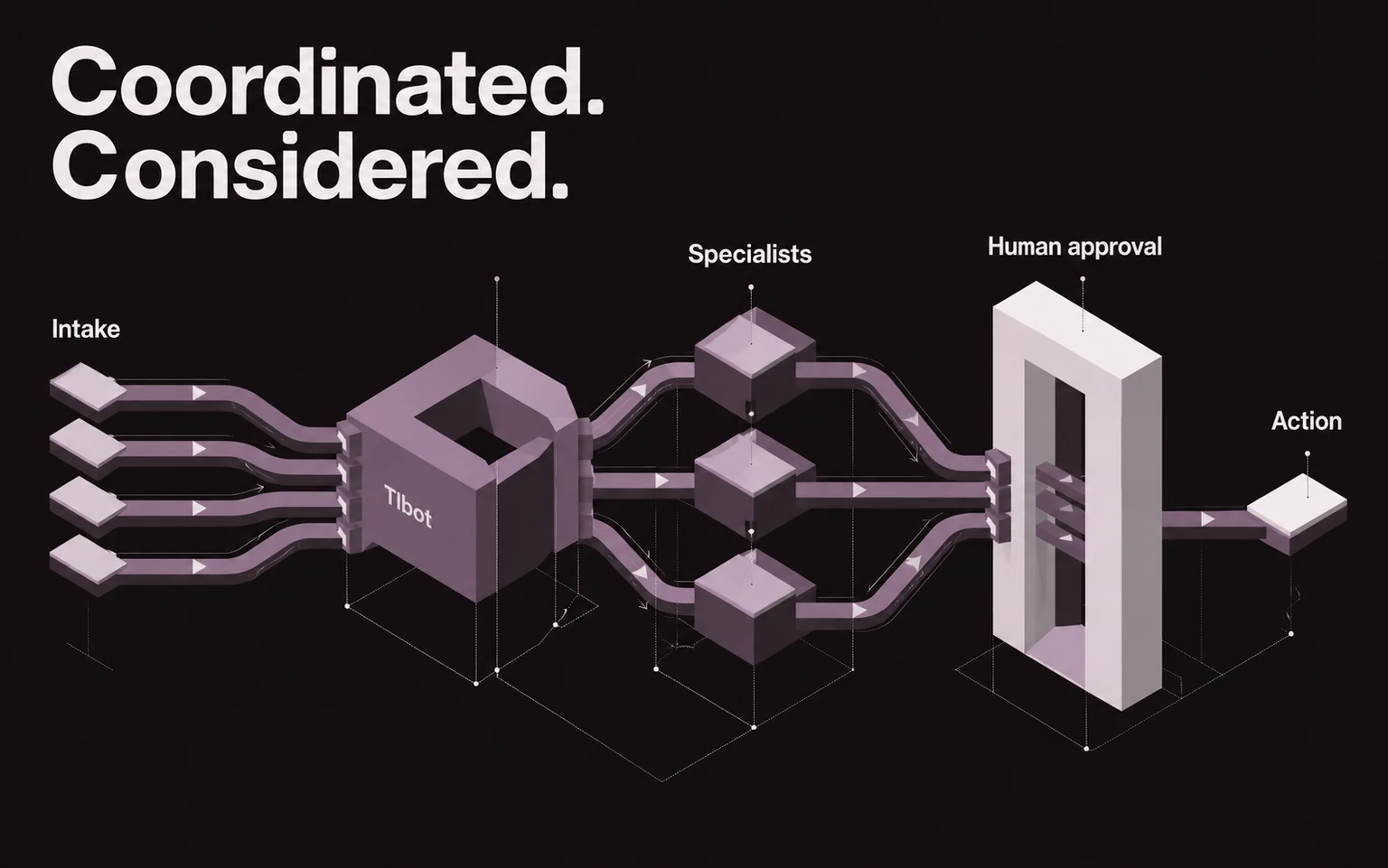
Work moves from conversations into intake and planning, then delivery. An agent can add coordination work if it creates another card or changes a status without context. TIbot connects those stages while preserving decisions people have already made.
What I built
I built and introduced TIbot in Slack and Jira, connecting specialist workflows through commands and webhooks, with scheduled work as well. It supports intake and linked development cards, including refinement and estimation. The workflow also covers sprint planning and analytics questions.
I define what context each agent needs and which changes it can make. I also decide where someone needs to approve the next action.
Handling duplicates and existing decisions
Duplicate detection handles work that arrives through more than one trigger. Protected updates and linked-card synchronization keep an incoming event from overwriting an existing decision. Follow-up tracking keeps the next action attached to its conversation thread.
Specialist workflows divide intake from planning and execution. People approve guarded changes and remain responsible for those decisions.
How I use AI in delivery
In independent product work, I built reusable specialist skills for discovery and implementation, including testing and security review before release. I adapted that approach for team delivery, with defined ownership and independent review before work advances.
I’m also developing Agent Workflow Learning. It records observations and tests proposed instruction changes against a baseline before a decision to adopt or roll back. It evaluates instructions and workflows without training model weights.
Discuss the work
Tell me what your team needs to build, or where the work is getting stuck.